

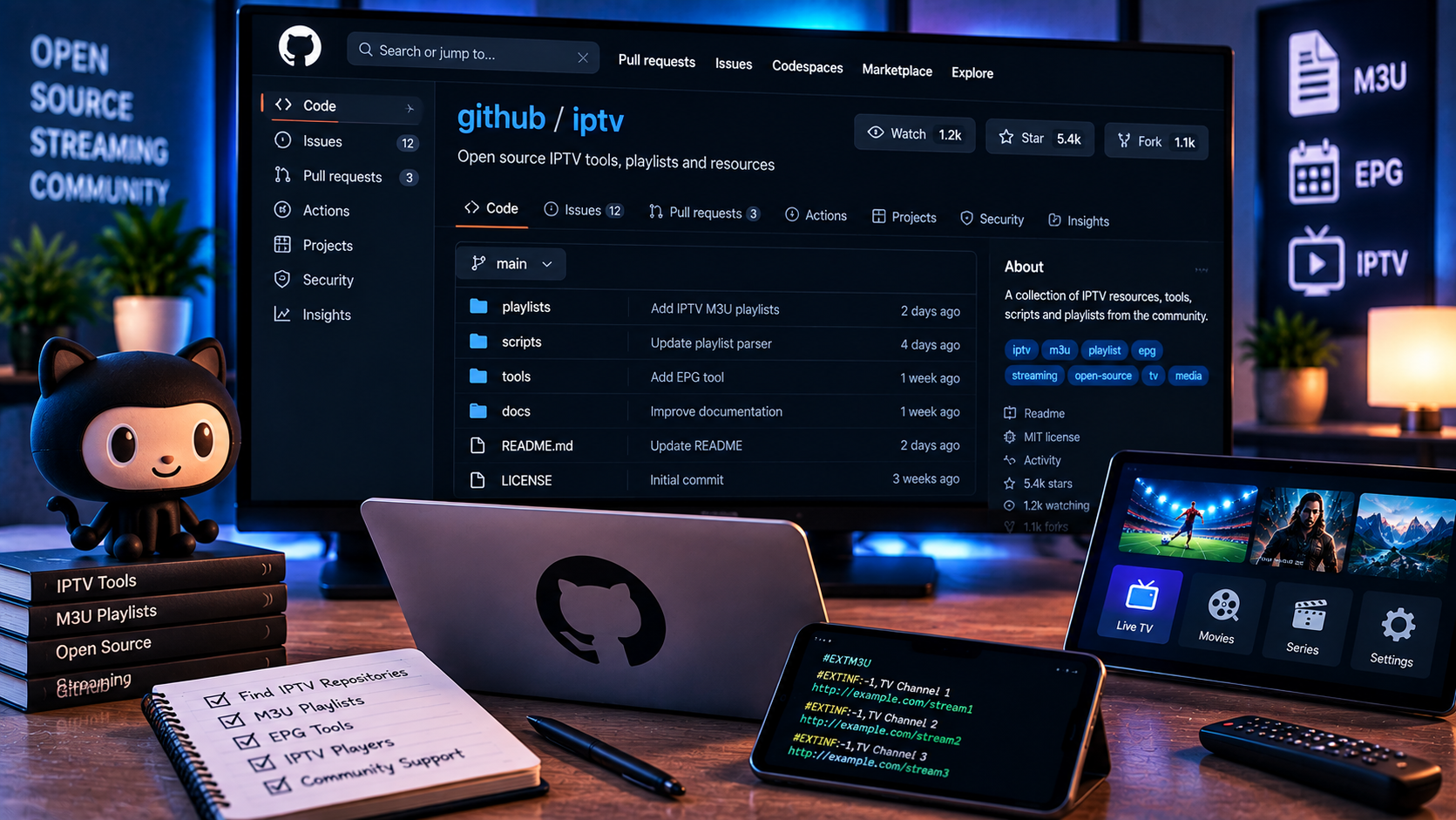
Using github iptv resources can be helpful when you want to understand free channel lists, M3U playlists, open source player workflows, and how public streams differ from paid subscriptions. The two competitor repositories show different approaches. iptv-org describes a worldwide collection of publicly available live channels, grouped by category, language, country, region, and guide data. Free-TV focuses on quality over quantity, free channels, HD where possible, mainstream viewing, and clear markers for GeoIP, YouTube, and SD feeds. Both are useful, but neither should be confused with a full managed IPTV service.
github iptv basics for beginners
GitHub is a code and documentation platform, not a TV provider. Repositories can store playlist files, scripts, issue templates, channel metadata, and contribution rules. In IPTV terms, the most common file is M3U or M3U8, which contains stream addresses and channel names. You paste that playlist into a player such as VLC, Kodi, TiviMate, IPTV Smarters, GSE, IPTVX, or another app that supports live streaming.
The key limitation is control. Public lists can change without notice because streams expire, geo blocks appear, or rights owners request removal.
Free list versus subscription
A free list is usually best for learning, testing, and watching available public channels. A subscription is built for broader access, support, devices, EPG, movies, series, sports, and account management. On Viking IPTV’s subscription page you can review the kind of plan, period, and device details that should be clear before relying on daily viewing.
What iptv-org teaches
The iptv-org repository is valuable because it separates playlist organization from channel discovery. It offers a main playlist and versions grouped by category, language, country, region, and other filters. Its documentation points users toward EPG resources, channel databases, API details, discussions, FAQ, and contribution rules. That structure shows strong topical coverage.
It also states an important legal position: the repository stores user-submitted links to public stream URLs and does not store video files. It says links may be removed if rights holders report problems. For Swedish users, that connects directly with upphovsrätt, rättigheter, myndigheter, böter, laglig IPTV, and illegal streaming concerns.
What iptv-org does not provide
Its FAQ says not every channel is available online, there is no VOD library planned, and Xtream Codes streams are avoided because they can be unstable and fail quickly. That means users looking for movies, series, or premium sports should not expect a free public playlist to behave like a managed service.

What Free-TV teaches
The Free-TV repository takes a stricter editorial approach. It describes an M3U playlist for free TV channels around the world, including sources that are free locally over the air or free on the internet, such as Plex TV, Pluto TV, Roku TV, Samsung TV Plus, and YouTube live channels. Its philosophy is quality over quantity: fewer channels, working streams, HD where possible, one URL per channel, and no paid channels.
That is a good lesson for users. A huge playlist is not automatically better. One clean public channel that plays reliably is more useful than ten duplicates.
Useful markers
Free-TV marks channels that are SD, geo blocked, or YouTube based. Those small labels help users understand why a stream may behave differently by location, quality, or source. A serious playlist should explain limitations instead of hiding them.
Players that can open GitHub lists
VLC is the simplest option on Windows, macOS, and Linux. Paste the raw playlist URL, open network stream, and test whether channels play. Kodi is stronger for TV style use because it can handle PVR features, local media, and guide data. Android TV users often prefer TiviMate or similar remote friendly apps. Apple users may choose IPTVX, iPlayTV, or GSE. Samsung and LG users need store compatible apps.
Viking IPTV’s installation guides help explain playlist URL, server address, Xtream login, profile name, EPG source, and device setup. The same careful entry matters when testing public playlists.
Raw links matter
Many beginners copy the GitHub page URL instead of the raw playlist URL. A player needs the direct M3U or M3U8 file, not a normal web page.
EPG, categories, and missing channels
EPG means electronic program guide. It tells you what is on now and later. Public playlists may have limited, incomplete, or separately hosted guide data. If your player shows channels but no program schedule, the playlist may not include matching EPG information. If times are wrong, check time zone and daylight saving.
Categories also matter. iptv-org shows how playlists can be grouped by entertainment, movies, news, sports, kids, documentary, music, language, and country. On Viking IPTV’s channel overview you can see how clear groups make live TV, sports, films, and series easier to browse.
Why channels disappear
Public stream links can fail when broadcasters change servers, tokens expire, platforms update URLs, or a stream becomes geo blocked. That is normal for open lists.
Legal and safety checks
IPTV is a delivery method, not proof that every stream is lawful. Free, public, and open source do not always mean authorized in your location. Swedish users researching IPTV should understand terms such as upphovsrätt, laglig IPTV, abonnemang, streamingtjänster, myndigheter, böter, rättigheter, and illegal streaming. If a playlist includes protected sports, new films, or commercial subscription channels without clear rights, treat it carefully.
Avoid modified apps, random ZIP files, suspicious scripts, private “premium GitHub list” sellers, and links that ask you to disable security settings. A neutral comparison with Monster IPTV can give perspective on how other providers describe packages and device support, but every service should be judged separately by rights, terms, payment, and support.
Account privacy
Do not publish your private M3U links, usernames, portal addresses, or passwords in GitHub issues, Reddit threads, or forums. They may contain account identifiers.
Public lists versus managed IPTV
Public playlists are useful for learning formats and testing players. Managed IPTV is different because viewers expect support, subscription periods, organized content, compatible devices, and help when settings fail. Before using any longer plan, check simultaneous streams, renewal rules, app support, payment method, and available help. Read frequently asked questions before changing VPN, DNS, cache, or advanced player settings.
Practical testing routine
Test one Swedish channel, one news channel, one sports channel, and one movie or series source if available. Try the same list in two players, on the same network, during normal evening use. Record whether failures are caused by playlist format, geo blocking, player limitations, or stream quality.
Best use cases
Use public repositories when you want to learn playlist syntax, compare players, test EPG behavior, or watch clearly free channels. Use a managed plan when your household needs consistent sports, films, series, subtitles, device help, and predictable renewal information during normal family viewing hours. Mixing those expectations is where most beginner confusion starts.
Final thoughts
GitHub lists are helpful for understanding M3U, M3U8, EPG, categories, public stream limits, and why open playlists need regular maintenance. A natural recommendation is to use free repositories for learning and testing, then compare any daily viewing setup by stability, rights, device support, and clear guidance. For anyone who would like more information or wants to ask questions directly, it is also possible to contact via WhatsApp
